Source Cordless Rechargeable Electric Screwdriver for Home, Industry, Medical
Compare 30 listings of cordless rechargeable electric screwdriver options featuring varying torque, battery types, and automation levels. Buyers can evaluate specifications for household, professional, and medical applications directly from verified manufacturers.
Key considerations
Products List




Comprehensive Sourcing Guide
Cordless Rechargeable Electric Screwdriver Sourcing Guide
Sourcing cordless rechargeable electric screwdrivers requires a clear distinction between consumer-grade handheld tools and industrial-grade automated systems. The market presents a wide spectrum of products, ranging from simple, battery-operated units for household assembly to complex, fully automatic machines integrated into manufacturing lines. Buyers must first define their operational context, as the technical requirements for a retail-grade precision screwdriver differ significantly from those of a high-torque industrial unit. Understanding this divide is the first step in filtering supplier listings and avoiding mismatches between tool capability and production needs.
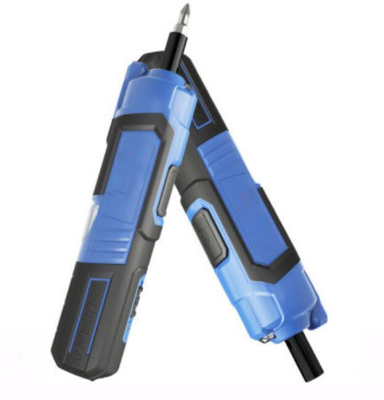
The observed market data indicates a diverse inventory with prices ranging from $4.50 to $3,530 USD and minimum order quantities (MOQs) spanning from 1 to 3,000 pieces. This variance suggests that suppliers cater to both small-scale retailers and large-scale industrial integrators. For instance, some listings highlight specific models like the MES-36A, which features a 3.6V 850mAh lithium battery and a torque adjustment of 2Nm (electric) to 10Nm (manual), targeting professional or semi-professional use. In contrast, other entries describe fully automatic systems with PLC cores and coreless motors, intended for high-volume industrial applications. Recognizing these distinct categories prevents the misallocation of procurement budgets and ensures that the selected equipment aligns with the intended workload.
Product Scope and Observed Listing Signals
The product scope for cordless rechargeable electric screwdrivers encompasses a variety of form factors, including straight bar styles, handheld units, and automated stations. Listings frequently specify attributes such as "Fully Automatic" or "Semiautomatic" operation, which directly impacts the integration complexity within a production line. For example, models like the FT-CS-0004N and FT-CSS-0004N are described with specific weights (0.6kg and 0.7kg respectively) and are marketed as ordinary products suitable for retail, medical, or general industry applications. These signals help buyers identify tools that are portable versus those designed for fixed, high-throughput environments.
Another critical signal is the power source and voltage configuration. While many cordless units rely on internal lithium batteries, such as the 3.6V 850mAh variant with a 30-minute charge time, other industrial models may list AC high voltage inputs or specific rated voltages like 48V. Some listings also mention USB charger inputs of 5V 500mAh, indicating compatibility with standard charging infrastructure. Buyers should carefully review these power specifications to ensure compatibility with existing facility electrical systems or charging stations. Misinterpreting a cordless tool as a mains-powered unit, or vice versa, can lead to significant operational disruptions and safety hazards during deployment.
Technical Specifications to Verify
When evaluating technical specifications, torque adjustment and rotational speed are paramount for ensuring precision and efficiency. The MES-36A model, for instance, offers a no-load speed of 280 RPM and adjustable torque ranging from 2Nm in electric mode to 10Nm in manual mode. This dual-mode capability is valuable for tasks requiring both fine control and higher force. Buyers should verify if the tool’s torque range matches the fastening requirements of their specific components. Over-torquing can damage delicate parts, while under-torquing can lead to loose assemblies, making precise calibration capabilities a non-negotiable feature for quality assurance.
Battery performance and motor type are equally critical factors that influence tool longevity and operational uptime. The presence of a coreless motor, as seen in some industrial listings, often indicates higher efficiency and faster response times compared to traditional brushed motors. Additionally, the operating time of 60 minutes (no load) for certain models suggests a balance between power and endurance. Buyers must assess whether the battery type, such as the 3.6V lithium variant, meets the shift requirements of their workforce. It is also essential to verify the charge time, as a 30-minute charge time allows for rapid turnover, whereas longer charging periods may necessitate purchasing multiple spare batteries to maintain continuous production flow.
Compliance and Safety Documentation
Compliance and safety documentation are essential for mitigating risk, particularly when dealing with electrical tools that operate at various voltage levels. Listings often mention warranties, such as a one-year warranty for the MES-36A, which serves as a baseline indicator of manufacturer confidence. However, buyers must go beyond warranty terms to verify electrical safety certifications. For tools operating at AC high voltage or specific rated voltages like 48V, compliance with regional electrical safety standards is mandatory. Buyers should request evidence of testing for insulation resistance, dielectric strength, and leakage current to ensure the tools are safe for operator use.
Video outgoing-inspection services, mentioned in some listings, provide an additional layer of verification for quality control. This feature allows buyers to visually inspect the tool’s assembly, wiring, and finish before shipment, reducing the risk of receiving defective units. While this is a helpful visual check, it does not replace formal certification documents. Buyers should insist on detailed test reports that cover both mechanical integrity and electrical safety. For industrial applications, verifying that the core components, such as the PLC and gearbox, meet industry-specific reliability standards is crucial for ensuring long-term performance and minimizing downtime.
Cost Drivers and Commercial Terms
Cost drivers for cordless rechargeable electric screwdrivers include the complexity of the automation level, the quality of the battery, and the inclusion of advanced features like PLC control. Fully automatic systems with coreless motors and PLC cores typically command higher prices, reflecting their integration into automated production lines. In contrast, handheld, semiautomatic units with basic lithium batteries are more cost-effective for general-purpose use. Buyers should analyze the total cost of ownership, considering not just the unit price but also the cost of replacement batteries, chargers, and potential maintenance over the tool’s lifespan.
Commercial terms such as MOQ and customization options significantly impact procurement strategy. The observed MOQ range of 1 to 3,000 pieces allows for flexibility, with some suppliers offering OEM services with an MOQ of 1,000 pieces. For buyers requiring branded tools or specific modifications, understanding the OEM MOQ is crucial for budgeting. Additionally, the packing method, whether transparent plastic seals or standard boxes, can affect logistics costs and product protection during transit. Buyers should negotiate terms that align with their inventory management strategy, ensuring that the MOQ does not tie up excessive capital in slow-moving stock.
Supplier Qualification and Quality Control
Supplier qualification involves verifying the manufacturer’s capability to produce consistent, high-quality tools. The presence of a factory designation and specific origin locations, such as Zhejiang, China, provides a starting point for due diligence. Buyers should assess the supplier’s production capacity and quality control processes, particularly for models with complex components like PLCs and gearboxes. Requesting samples for rigorous testing is a standard practice to validate the supplier’s claims regarding torque accuracy, battery life, and build quality. This step is essential for identifying potential discrepancies between marketing descriptions and actual product performance.
Quality control should also extend to the verification of core components and assembly standards. Listings that specify core components like PLCs, gearboxes, and motors indicate a higher level of engineering sophistication. Buyers should ensure that these components are sourced from reputable manufacturers and that the assembly process includes rigorous testing protocols. The provision of video outgoing-inspection is a positive indicator, but it should be complemented by statistical process control data or batch testing results. Establishing a clear quality agreement with the supplier, including acceptance criteria and rejection procedures, helps maintain consistency across large orders.
Long-Term Procurement Checks
Long-term procurement success depends on the availability of spare parts and technical support. For tools with complex components like PLCs and coreless motors, ensuring a steady supply of replacement parts is critical for minimizing downtime. Buyers should inquire about the supplier’s policy on spare parts availability and lead times for replacements. Additionally, verifying the warranty terms and the process for claiming warranty service is essential. A one-year warranty is common, but buyers should clarify whether this covers labor, shipping, and specific components like batteries, which often have shorter lifespans than the main unit.
Continuous monitoring of supplier performance and product reliability is necessary to adapt to changing operational needs. Buyers should track metrics such as failure rates, battery degradation, and customer feedback to assess the long-term value of the purchased tools. Regular audits of the supplier’s quality control processes can help identify potential issues before they impact production. By maintaining a proactive approach to supplier management and product evaluation, buyers can ensure that their cordless rechargeable electric screwdrivers continue to meet performance standards and support efficient operations over time.
FAQs
What is the battery type and capacity?
The device uses a 3.6V 850mAh Lithium Battery for power. This battery supports a charge time of 30 minutes and provides up to 60 minutes of operating time under no-load conditions.
How is the torque adjusted on this tool?
Torque adjustment is available in both electric and manual modes. The electric setting offers 2n.M while the manual setting allows for up to 10n.M of torque control.
Can I find customized versions of this screwdriver?
No, the standard product listed is non-customized. However, OEM customization is available with a minimum order quantity of 1000 pieces for factory direct orders.
What is the warranty period for the product?
The product comes with a one-year warranty coverage. This applies to the new condition units supplied by the factory in China.
Which industries can this screwdriver be used in?
This tool is applicable for retail, medical, and general industry sectors. It is designed for both household and professional use cases.
What is the rotation speed of the device?
The no-load rotation speed is 280 Rpm. This speed is suitable for precision tasks requiring controlled operation without excessive force.
How long does it take to charge the battery?
Charging the battery requires 30 minutes using the provided USB charger input. The input specification is 5V 500mAh for safe and efficient recharging.